
Stage Fright: Why It Happens and How to Tame It
Last updated: August 2026
Key takeaways
- Stage Fright isn’t necessarily a lack of confidence. It can undermine the confidence you already possess.
- You are not broken. Stage Fright is a natural response to conditions your brain interprets as threatening.
- Fighting your nerves can tighten their grip. Accepting them changes your relationship with them.
- The READ method gives you four steps for working with nerves instead of fighting them.
- There is no one-and-done cure. The goal is a more workable performance situation.
What is Stage Fright?
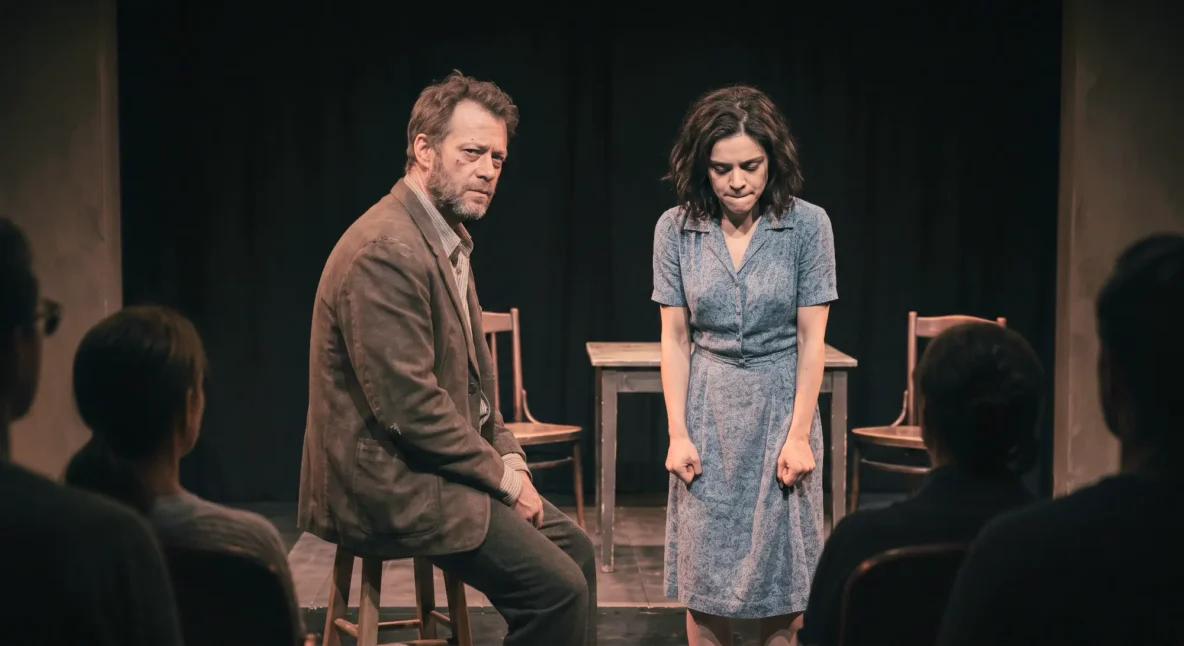
That familiar feeling rushes in. Your chest tightens, your hands tremble, your heart pounds, and your thoughts start to spiral just as you’re about to perform.
It rattles you because you prepared so hard for this moment. You thought you’d be confident. Instead, self-doubt starts hounding you, and you wonder whether something is wrong with you.
There isn’t. You’re not broken, and you’re not alone. What you’re experiencing is Stage Fright (aka performance anxiety), a real physical and mental response to a situation your brain has interpreted as threatening. It doesn’t necessarily mean you lack confidence. In fact, Stage Fright can undermine confidence you already possess.
Confidence and nerves
There’s a big misunderstanding about the connection between confidence and nerves. Most performers assume that if they could just find more confidence, their nerves would disappear. It’s often the opposite.
Many performers have already earned plenty of confidence. They’re the musician who’s mastered the score, the actor who owns the role, the dancer who’s embodied the choreography, or the singer who knows exactly what they’re capable of. That artistic mastery is the taproot of their confidence. It’s deep, and it’s real.
For those performers, the problem isn’t lack of confidence. Performance anxiety is blunting their edge and keeping them from fully deploying their artistry. And this isn’t limited to formal performances. Stage Fright can appear during rehearsals, auditions, masterclasses, competitions, lessons, and other situations where you’re performing in front of someone and the stakes feel high.
Why does performing cause anxiety?
Because part of your brain is doing its job. I think of performance anxiety as your Internal Bodyguard stepping in. The surge of adrenaline isn’t a malfunction. Your brain has detected something it regards as a threat and is trying to protect you.
When that happens, your sympathetic nervous system can kick in automatically. Adrenaline helps prepare your body to fight, flee, or freeze. Your heart may pound, your hands may tremble, your muscles may tighten, and your mind may suddenly feel much less cooperative.
One structure involved in detecting threats is the amygdala, a small almond-shaped region deep in the brain. With Stage Fright, your Internal Bodyguard can react to performing in front of other people as though the situation poses physical danger, even though what is actually at stake may be judgment, embarrassment, an opportunity, or your sense of self.
Audience + Judgment + Threat
There’s a logical formula behind Stage Fright:
Audience + Judgment + Threat = Stage Fright
First comes the Audience. That can mean a packed theater, an audition panel, a teacher, a director, or even one person whose opinion matters to you. Then comes Judgment, whether you’re being formally evaluated or simply imagining what someone else may think.
Finally there’s Threat, the feeling that a negative judgment could cost you something important. That might be a role, an opportunity, your credibility, someone’s approval, or simply the performance you worked hard to give.
Understanding the formula helps demystify what you’re experiencing. Stage Fright is a predictable response to specific conditions, not a personal failure.
Sometimes the threat is obvious: “If I don’t nail this audition, I don’t get the role.” Other times it’s subtler. But you don’t necessarily need to analyze the threat in the middle of a performance. The more useful skill is learning to keep your attention on performing even when your Internal Bodyguard has other ideas.
Am I unusual for feeling this way?
No. Stage Fright isn’t a beginner’s problem that simply disappears once you’re accomplished enough. Research with professional performers has found substantial levels of performance anxiety among highly trained musicians, actors, dancers, and other working performers.
That’s important because it challenges one of the most damaging assumptions performers make: “If I were really good, I wouldn’t feel this way.” Experience and ability don’t remove audience, judgment, or threat.
Where does Stage Fright show up?
It can affect you physically, mentally, emotionally, and behaviorally.
| Area | What it can look like |
|---|---|
| Physical symptoms | A pounding heartbeat, tremors, tightness in your chest, shaking hands, muscle tension |
| Cognitive difficulties | Your mind going blank, thoughts spiraling, difficulty recalling familiar material, attention pulled away from performing |
| Emotional consequences | Self-doubt, embarrassment, frustration, or the sense that something must be wrong with you |
| Behavioral impacts | Avoidance, pulling back from preparation, cancelling, choosing safer opportunities, or passing up performances altogether |
That last category is easy to misread. A performer who suddenly seems less committed may actually be trying to escape the discomfort of an approaching performance. Don’t be an ostrich. Avoidance usually doesn’t solve the problem and can make the upcoming situation loom even larger.
Stage Fright also travels well beyond the concert hall. It can appear in ensemble rehearsals, workshops, video auditions, networking events, casting calls, lessons, and one-to-one sessions with a teacher, director, or conductor.
Why doesn’t “just calm down” work?
Remember those childhood finger traps? The more you pulled to free yourself, the tighter the trap became. The way out was counterintuitive: stop pulling.
Performance anxiety can work the same way. The harder you fight the nervousness, the more attention and importance you give it. The same applies to your thoughts. We like to believe we have substantial control over what appears in our minds, but we have far less than we suppose.
Try forcing yourself not to think an anxious thought and you can quickly end up playing Thought Whack-A-Mole. That’s especially costly during a performance because performing already requires attention. If some of that attention is going toward the Internal Bodyguard and even more is going toward fighting the Internal Bodyguard, there’s less left for the task at hand.
You need a better strategy than trying to suppress or rewrite every nervous thought. The mindful alternative is to accept the interruption and redirect your attention to performing.
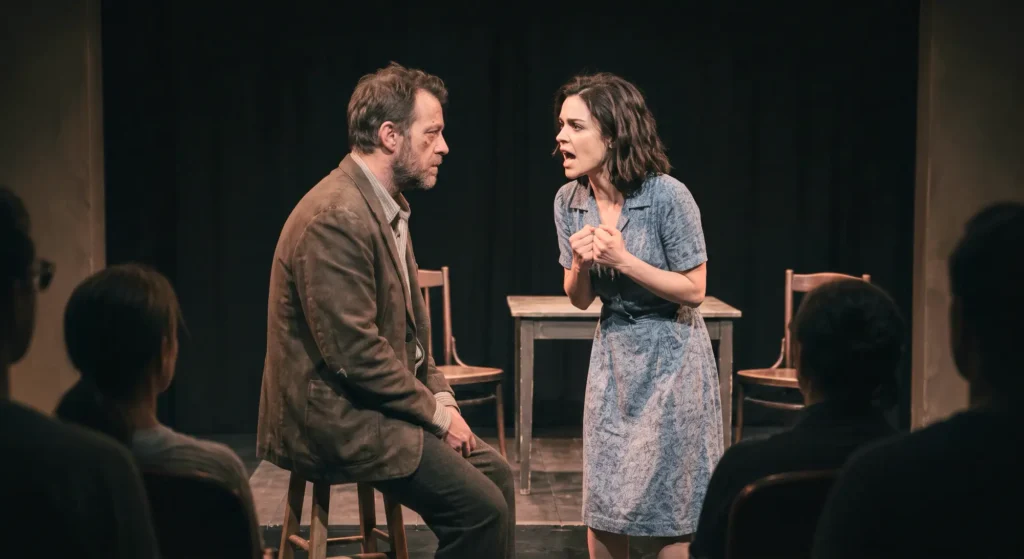
How do you tame Stage Fright? The READ method
The approach at the heart of Perform with Confidence is a four-step mindfulness framework called READ: Remember, Engage, Accept, Detach.
Remember the core values that give you the courage and commitment to stand up to your anxiety.
Engage fully in performing.
Accept anxious thoughts or feelings each time they disrupt your concentration, rather than fighting them, and return your attention to performing.
Detachment from your anxiety follows, allowing you to enjoy a more workable situation.
Remember gives you a reason to stay with the performance when your Internal Bodyguard wants you to escape. Engage directs your attention toward the task at hand, while Accept keeps you from wasting more attention fighting thoughts and sensations that have already appeared.
Then comes Detach, but detachment isn’t something you force. It’s the fruit of the other steps. As you stop fighting the nervousness and keep returning to performing, the anxiety can begin to recede into the background.
Read the full explanation of the READ method, including how each step works and why the approach is counterintuitive.
What about the usual advice?
You’ve probably heard some version of the usual advice: be well prepared, fake it till you make it, think positive, relax, or imagine the audience in its underwear.
Preparation absolutely matters. You need the ability before you can access it under pressure. But preparation and Stage Fright aren’t the same problem. If you can perform reliably in practice and struggle only when audience, judgment, and threat appear, simply doing more repetitions may not address what’s changing.
The same problem applies to advice that tells you to force yourself into a different emotional state. “Calm down” sounds sensible until you’re standing backstage with your heart pounding and your Internal Bodyguard fully awake. The READ approach starts somewhere more workable: let the feeling be there and put your attention back on what you’re there to do.
Is there a cure?
No. I’m not offering a one-and-done cure for performance anxiety because there isn’t one. Stage Fright can return whenever you perform in front of people whose judgment feels threatening, which is why even accomplished performers can still get nervous when the stakes change.
Saying, “I’ll never get nervous again,” is a dead man’s goal, the kind only a dead person could guarantee. What you want instead is workability, a situation where you can function effectively even if it isn’t perfectly comfortable.
The better question isn’t, “How do I eliminate my nerves?” It’s, “How unworkable does anxiety make performance situations for me, and in what specific ways?”
Mindfulness is a skill, and like any skill it improves with reps. Progress may be quiet. Then one day you notice the nervousness that used to dominate your performance has lost some of its grip.
Frequently asked questions
Why am I so nervous performing when I know the material cold?
Because Stage Fright isn’t necessarily a competence problem. Your preparation built real ability. Performance anxiety can interfere with access to that ability when audience, judgment, and threat are present.
What are the symptoms of Stage Fright?
Common symptoms include a pounding heartbeat, tremors, tightness in the chest, shaking hands, muscle tension, racing thoughts, difficulty concentrating, and your mind going blank. It can also show up emotionally as self-doubt and behaviorally as avoidance.
Does Stage Fright ever go away?
It may become much less disruptive, but permanently eliminating nervousness isn’t a workable target. Stage Fright can appear whenever audience, judgment, and threat are present. What can change dramatically is your relationship with it and how much it interferes with performing.
Why can’t I just control my nervous thoughts?
Because we have less direct control over what thoughts appear than we’d like to believe. Fighting them can consume the attention you need for performing. READ emphasizes accepting the interruption and returning your attention to the task at hand.
Is this only for formal performances?
No. Stage Fright travels. It can appear in rehearsals, workshops, auditions, lessons, networking events, casting calls, competitions, and other situations where you’re performing in front of someone and the stakes feel high.
Where to go from here
If your performance drops under pressure, see Why Do I Perform Worse on Stage Than I Do in Practice?
If shaking or tremors are the main problem, see Why Do I Shake on Stage and Not When I Practice?
If you sometimes lock up completely, see Why Do I Freeze on Stage?. If familiar material suddenly becomes hard to recall, see Why Do I Forget What I Practiced?. And if you’re well prepared but still nervous, see Why Do I Still Get Stage Fright Even Though I’m Prepared?.
If you’d rather try the approach than just read about it, the free introductory lesson gives you a firsthand taste of the mindfulness skills behind READ. No card required.
The full Perform with Confidence course teaches the complete method and puts it into practice in real performance situations.
Dr. David Lee Fish, Ph.D. is a performance anxiety specialist and the founder of Rise Up Eight. He is a direct student of Korean Zen Master Seung Sahn, the same Korean master who taught Jon Kabat-Zinn, and the author of The 5-Day Stage Fright Solution.