
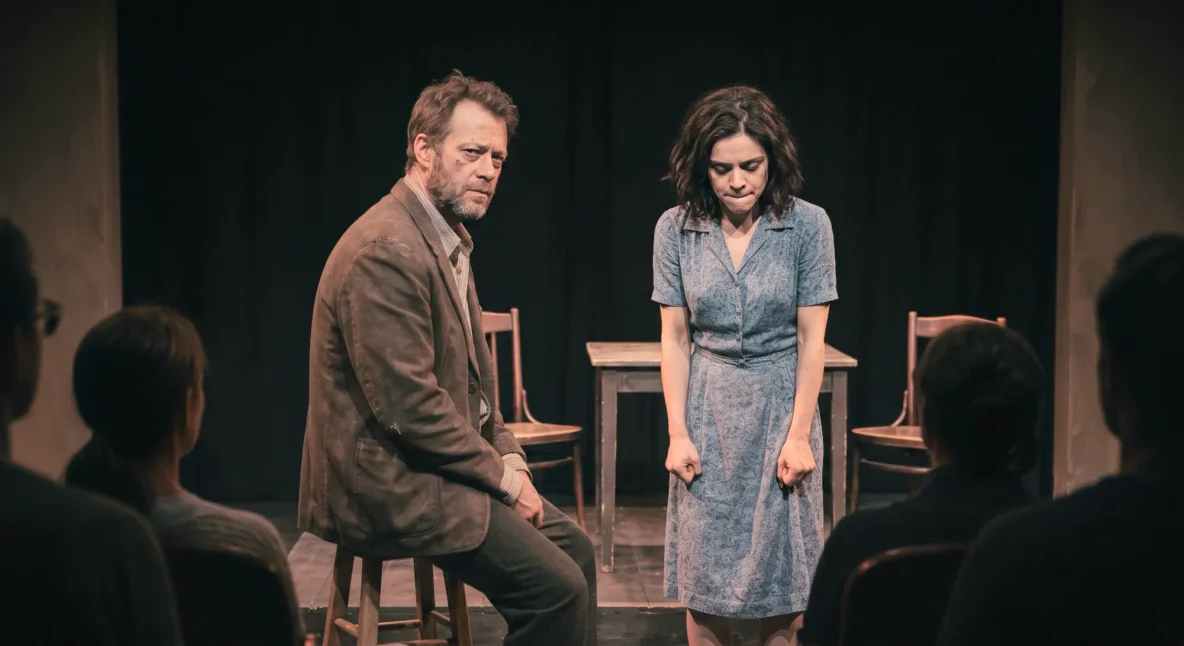
Why Do I Forget What I Practiced?
Last updated: September 2026
Key takeaways
- Forgetting material on stage does not mean your preparation failed. Stage fright can interfere with access to material you know well.
- Performance anxiety pulls attention away from the task at hand and toward threat, judgment, and self-monitoring.
- Trying desperately to remember can make recall harder because the struggle consumes even more attention.
- The goal is not to guarantee perfect recall. It is to recover more quickly and keep the performance workable.
- The READ method helps you stop fighting the lapse and return your attention to the next thing you can actually do.
Why do I forget what I practiced on stage?
Because stage fright can interfere with your access to material you already know.
You may have played the passage hundreds of times, memorized the scene, embodied the choreography, or sung the lyric without hesitation in rehearsal. Then you step in front of other people and suddenly the next note, line, movement, or entrance seems to disappear.
That does not mean the preparation was fake.
It does not mean your ability vanished.
Stage fright (aka performance anxiety) can disrupt your access to what you already built.
Your brain is dealing with a different situation
Practice and performance are not the same environment.
In practice, you can stop, restart, experiment, and make mistakes without much consequence.
On stage, the conditions change:
Audience + Judgment + Threat = Stage Fright
Now someone is watching.
You may feel judged.
And that judgment may seem capable of costing you something important, whether that is an opportunity, your reputation, your teacher’s approval, or simply the performance you worked hard to give.
Your internal bodyguard responds to those conditions as a threat.
That response can leave less attention available for remembering what comes next.
Remembering takes attention
Performing familiar material can feel automatic when everything is going well.
But memory still depends on attention.
When stage fright arrives, your attention can get pulled in several directions at once: What if I forget? What comes next? Did they notice that mistake? I have to remember this. Don’t blank.
That is attention you are no longer giving to the performance itself.
Then comes the second problem.
You start fighting the thoughts.
Now some of your attention goes to the nervousness, and some more goes to trying to force it away. You end up playing Thought Whack-A-Mole.
The harder you try to control what is happening in your head, the more attention you give it.
Why forcing yourself to remember can backfire
You’ve probably experienced this outside performance.
Someone asks you for a familiar name. You know you know it. You push harder. Nothing.
Then ten minutes later, while you’re thinking about something else, the name pops into your head.
Performance recall can behave the same way.
When you panic and demand that your brain produce the next line or note immediately, you add another layer of pressure: Come on. You know this. Remember. Remember. Remember.
That struggle can make the lapse feel even bigger. The counterintuitive move is not to fight harder.
It’s to return to the performance.
The material is still there
This point matters because forgetting on stage can shake your confidence badly.
You may walk away thinking: I never really knew it.
That conclusion is often wrong.
If you can perform the material reliably in practice, then your preparation has built something real.
An actor who has delivered the same scene dozens of times did not suddenly stop knowing the scene. A musician who has played the passage every day did not lose the passage walking from the dressing room to the stage.A dancer did not forget months of training in thirty seconds.
Your ability is intact. Your access to it has been disrupted.
That is a different problem.
What to do when your memory slips
You need something simpler than trying to force recall.
That is where the READ method comes in.
Remember the core values that give you the courage and commitment to stand up to your anxiety.
Engage fully in performing.
Accept anxious thoughts or feelings each time they disrupt your concentration, rather than fighting them, and return your attention to performing.
Detachment from your anxiety follows, allowing you to enjoy a more workable situation.
If you forget something, accept that the lapse happened, find the next thing you can engage with.
For a musician, that might be:
- the harmony
- the beat
- another player
- the next entrance
- the shape of the phrase
For an actor:
- your scene partner
- the intention of the scene
- the next cue
- what is actually happening in the moment
For a dancer:
- the music
- the next position
- another dancer
- the movement already underway
You are looking for a doorway back into the performance.
Recovery is part of performing
One of the most damaging ideas performers carry is that a good performer never forgets.
That is not a workable standard. Human beings lose focus. Memory slips. Mistakes happen.
A stronger performance skill is recovery.
Can you return without turning the mistake into the rest of the performance? Can you pick up again rather than spending the next five minutes replaying what happened? Can you accept the disruption and continue?
That is trainable.
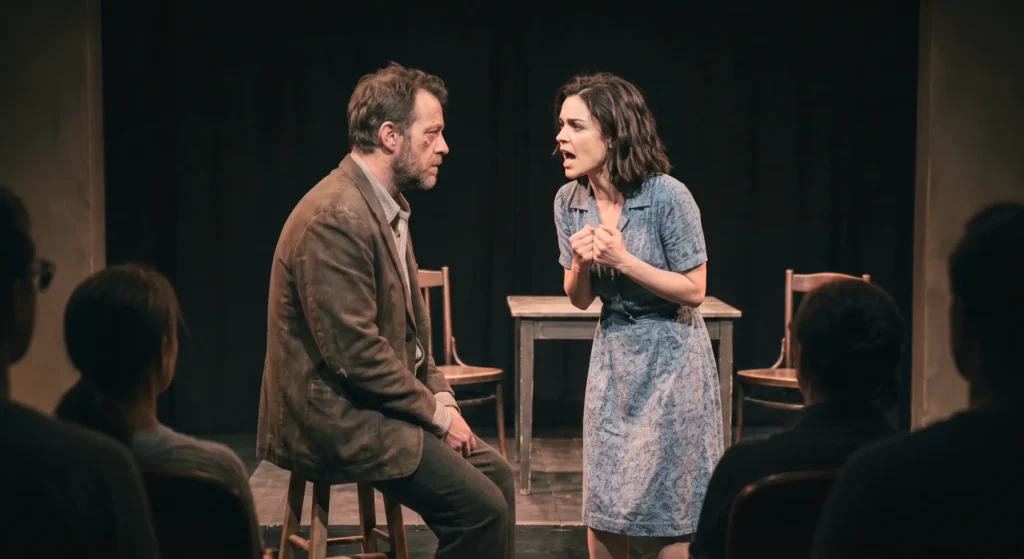
Practice the return
You can work on this in practice.
When you make a mistake, resist the urge to treat it like a crisis. Notice it. Accept it. Return.
Sometimes deliberately start from somewhere other than the beginning. Practice getting back into the material. Practice continuing after a mistake instead of automatically restarting.
The point is not to rehearse failure. The point is to develop confidence in your ability to recover.
Every return is a rep.
Frequently asked questions
Why can I remember everything in practice but forget it on stage?
Because the performance adds audience, judgment, and threat. Stage fright can pull attention away from recall and toward the perceived danger of the situation.
Does forgetting mean I did not memorize the material well enough?
Not necessarily. If you can reproduce the material consistently in practice, the problem may be access under pressure rather than inadequate preparation.
Why does trying harder to remember make it worse?
Because trying to force recall adds pressure and consumes attention. The more attention you give to the lapse, the less attention you have available for the performance.
What should I do immediately if I forget?
Accept that it happened and engage with the next available part of the performance. Look for a cue, rhythm, phrase, scene partner, or other anchor that helps you re-enter.
Can experienced performers forget material too?
Yes. Experience does not eliminate the conditions that trigger stage fright. Skilled performers can still encounter situations where pressure disrupts concentration and recall.
Where to go from here
If forgetting is part of a broader performance drop, see Why Do I Perform Worse on Stage Than I Do in Practice?
If the experience feels more like your whole mind or body locks up, see Why Do I Freeze on Stage?
The READ Method: Four Steps to Tame Stage Fright explains the complete framework for staying engaged, accepting disruptions, and returning your attention to performing.
And if you want to experience the approach firsthand, the free introductory lesson for Perform with Confidence gives you a practical introduction to the mindfulness skills behind.
Dr. David Lee Fish, Ph.D. is a performance anxiety specialist and the founder of Rise Up Eight. He is a direct student of Korean Zen Master Seung Sahn, the same Korean master who taught Jon Kabat-Zinn, and the author of The 5-Day Stage Fright Solution.