
Is a Little Speech Fright Good?
One of the most common things you hear people say about speech and stage fright is that being a little nervous is actually good for you.
Really?
Well, that’s what a lot of folks say at any rate. In fact, country artist Faith Hill once said, “A little bit of stage fright, then I’m ready.”
The explanation for why a little stage or speech fright is good seems to go something like this. In some sort of way, it leads to better performance than if you’re completely at ease.
But is it true? Is having a few butterflies a good thing?
Maybe Yes
There are actually a couple of answers to that question. One is maybe. Being a little nervous can help bring out your best, at least under certain circumstances.
For example, the same fight-flight-or-freeze response that causes such unwanted symptoms as a pounding heart and labored breathing could certainly have an upside if you’re running a 100-meter dash. A wash of adrenalin can also invigorate you. That too can aid good performance, as long it doesn’t get out of hand.
The Rub
And there’s the rub. How can you possibly will yourself to experience just the right degree of nervousness to achieve an ideal level of arousal without overdoing it to the point that the symptoms of anxiety begin to mar your performance?
Here’s the second answer to the question of whether a little nervousness is good for you. The body releases adrenalin through the bloodstream not only when you’re frightened or nervous but also when you’re excited.
So, I’d change the statement “a little nervousness is a good thing” to instead read “a little excitement is a good thing.” More often than not, such excitement is what brings a speech or performance to full life.
Is a little nervousness a good thing then? Not really. However, a little excitement almost always is. In fact, peak performance calls for it.
Here’s what I think sometimes happens:
Mistaken identity
We innately understand how important excitement is to performance. It’s to the point that we subconsciously psych ourselves up before a speech, performance or competition. The process being subconscious, we simply mistake being pumped up with excitement as being nervous when we notice butterflies in our stomach.
Remember, the physical symptoms of excitement and nervousness are almost identical. You just assume you’re nervous when you feel your heart pounding and your fingers trembling. “Hmm. What gives? I guess I must be nervous.”
Self-fulfilling prophecy
The danger in such self talk is you that can wind up making yourself really and truly anxious. It becomes like a self-fulfilling prophecy.
On the other hand, this explanation actually helps explain why we seem to get anxious over even completely benign events. Maybe you aren’t so much nervous as you are excited, because you want to do a good job. Now there’s an idea a person can get behind. 🙂
Yerkes–Dodson law
P.S. I’d love to tell you that I came up with these brilliant thoughts about how important excitement is to performance. Alas, the psychiatrists Dr. Yerkes and Dr. Dodson beat me to it over a century ago.

As Wikipedia tells us the Yerkes–Dodson law is an empirical relationship between arousal and performance, originally developed by psychologists Robert M. Yerkes and John Dillingham Dodson in 1908. The law dictates that performance increases with physiological or mental arousal, but only up to a point. When levels of arousal become too high, performance decreases. The process is often illustrated as a curvilinear, inverted U-shaped curve which increases and then decreases with higher levels of arousal.
What do you think? Do you believe a little speech or stage fright is a good thing? Share your thoughts by commenting below.
Don’t Let Speech Fright Undermine You
Tame your fear of speaking in front of others regardless of the situation.
The 5-Day SPEECH FRIGHT Solution provides a proven strategy that you can put quickly put to work alleviating your nervousness
Transform your anxiety and take control of your speaking skills today to achieve your full potential!”
Tell Me More

FAQs
Here are FAQs related to the Yerkes-Dodson Law:
Q: What is the Yerkes-Dodson Law?
A: The Yerkes-Dodson Law describes the relationship between arousal and performance, suggesting that moderate arousal leads to optimal performance, while too little or too much arousal can hinder effectiveness.
Q: How does the Yerkes-Dodson Law apply to public speaking?
A: In public speaking, moderate stress can enhance focus and delivery, but excessive anxiety may impair performance, while too little stress might lead to under-preparation.
Q: What tasks benefit most from the Yerkes-Dodson Law’s principles?
A: Simple tasks typically perform better under higher arousal, while complex or unfamiliar tasks require lower arousal for optimal results.
Q: Can the Yerkes-Dodson Law help with managing stress?
A: Yes, understanding this principle can help balance stress levels by identifying when stress is motivating versus when it becomes counterproductive.
Q: Is the Yerkes-Dodson Law universally applicable?
A: While widely supported, its application varies depending on individual differences and task complexity, making it a guideline rather than a strict rule.
Dr. Fish Says
A little speech fright can be a good thing. It sharpens your focus, boosts adrenaline, and prepares you to perform at your best. Rather than seeing it as fear, learn to embrace and channel it into the excitement of positive energy for a more impactful delivery.

Related Posts
[related_post post_ids=”151″]
Oct. 27, 2025
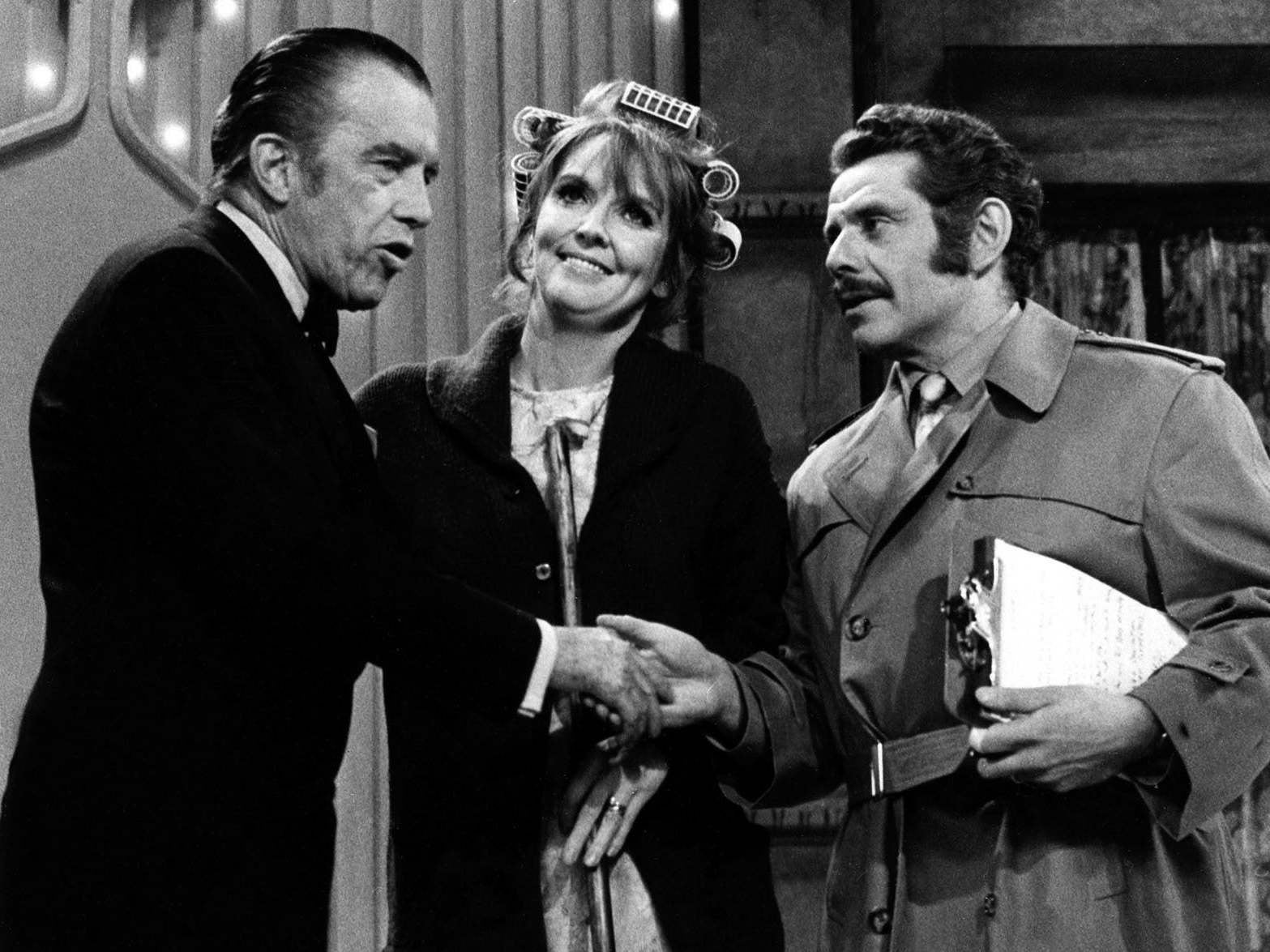
Why Does Stage Fright Hit Even Comedy Legends Like Stiller & Meara
Jun. 10, 2025
The Deep Danger at the Root of Performance Anxiety (and How to Unearth It)
Jun. 10, 2025
Why You Freeze in the Spotlight: The Three Factors Behind Performance Anxiety
Jun. 08, 2025
Speech Fright in Presidential Debates
Jun. 07, 2025
Performance Anxiety Demystified: The Real Link Between Speech Fright, Stage Fright, and Competition Anxiety
Jun. 07, 2025
3 Surprising Mistakes That Make Performance Anxiety Worse—and What to Do Instead
Mar. 19, 2025
Alan Bennett has suffered from stage fright since he forgot his own monologues | Daily Mail Online
Mar. 19, 2025
The Yips: Steve Sax Disease
Mar. 19, 2025
What Shohei Ohtani’s Stage Fright Can Teach Performers About Handling Pressure
Mar. 19, 2025
What Shohei Ohtani’s Stage Fright Can Teach Us About Public Speaking Anxiety
Jan. 24, 2025
Adele’s Fear of the Stage
Jan. 24, 2025
Bill Hader
Jan. 24, 2025
Stage Fright: Joe Kowan’s TED Talk
Jan. 24, 2025
Stage Fright: PJ Gallagher’s Reality Bites
Jan. 24, 2025
Lamaze for stage fright. Wait, what?
Jan. 24, 2025
Actor Jonathan Gillard Daly on Stage Fright
Jan. 24, 2025
Michael Bay & the Terrible, Horrible Very Bad Speech Fright Day
Jan. 24, 2025
Stage Fright & Speech Fright: Infographic of Surprising Facts
Jan. 24, 2025
The Yips & Ernie Els
Jan. 24, 2025
Speech Fright: Reporter Reinforces Common Misconception
Jan. 24, 2025
NYT Article on Smart Apps for Stage Fright
Jan. 24, 2025
Zayn Malik’s Stage Fright No Show
Jan. 24, 2025
Anxiety Robs Australian Swimmers at Olympics
Jan. 24, 2025
Stage Fright: What You Absolutely, Positively Need to Know
Jan. 24, 2025
History of Stage Fright in the Performing Arts
Take Action: Tame the Fear. Unlock Your Voice.
If you are tired of anxiety calling the shots and undermining your confidence when you speak in front of others, it’s time for your breakthrough moment.
The anxiety doesn’t get the final say. Your voice does. We invite performers, speakers, and athletes to explore our simple, proven, and mindfulness-rooted training, such as the Speak with Confidence courses and coaching, to help you transform your relationship with your nerves. This program teaches you to move from feeling stuck to unstuck—not by fighting fear, but by changing your relationship with it.